

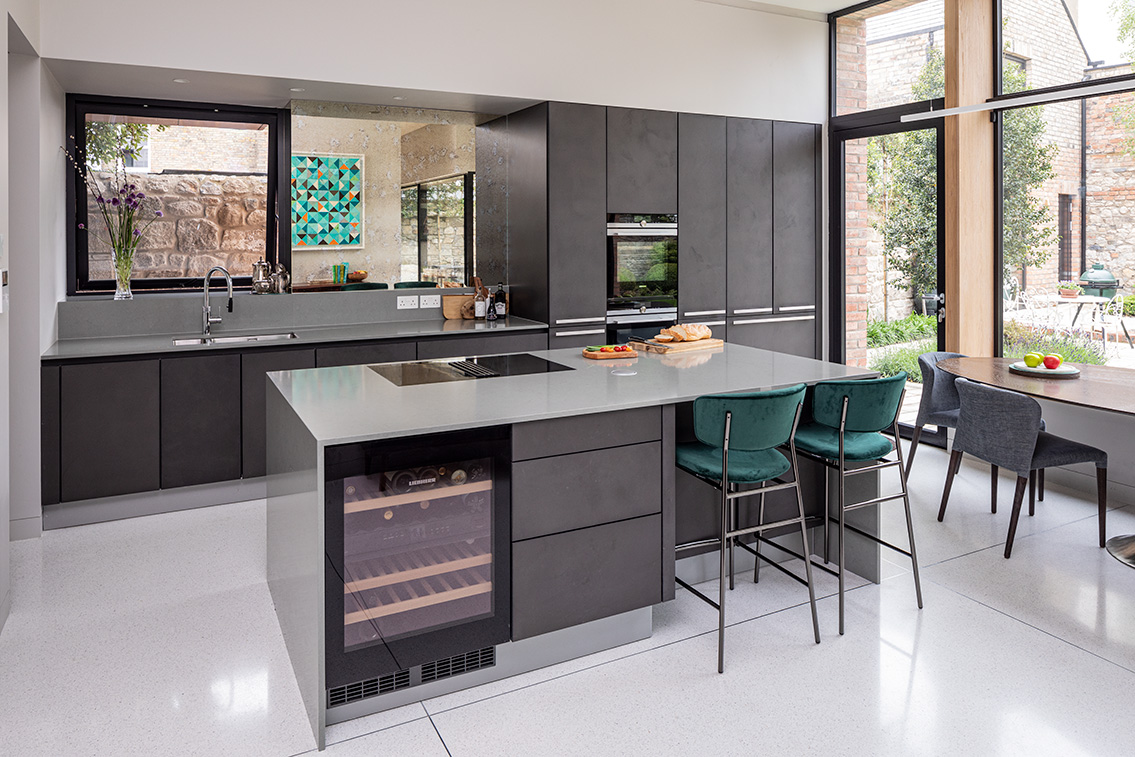
For many Dublin homeowners, the kitchen is where the real decision-making happens: it’s the room that shapes daily life, hosts every gathering, and often makes or breaks a sale down the line. Choosing between a standard renovation and one of the premium kitchens on the market isn’t just a style decision, it’s a financial one. This guide sets out exactly what luxury costs in Dublin, when it pays off, and when a more modest spend makes better sense.
Key Takeaways
- A true luxury kitchen in Dublin typically starts around €40,000–€50,000, with many projects running to €70,000 or more depending on size and specification.
- In established Dublin areas such as Rathmines, Clontarf, Blackrock, Castleknock and Ballsbridge, a well-designed kitchen can add roughly 8–15% to resale value when it’s aligned with the property’s market level.
- Luxury becomes genuinely “worth it” when layout, storage and durability are prioritised over short-lived trends and unnecessary gadgetry.
- Many homeowners are better served by a high-quality “mid-range plus bespoke touches” kitchen rather than an all-out luxury spec – a proper design consultation is the best way to work out which path suits you.
Understanding What “Luxury Kitchen” Really Means in Dublin Homes
In practical terms, luxury isn’t a price tag or a brand name stuck on a door front. It’s a combination of materials, craftsmanship and planning that a standard or budget kitchen simply doesn’t offer.
- In Dublin, luxury usually means bespoke cabinetry, high-grade worktops (quartz, Dekton, natural stone), fully integrated appliances, and lighting tailored to how the room is actually used, rather than an expensive-sounding brand fitted into a generic layout.
- There’s a clear difference between flat-pack and budget ranges from big-box retailers, made-to-measure modular systems, and fully bespoke joinery built to fit the uneven walls and odd angles common in period Dublin homes.
- Luxury kitchen design is driven by lifestyle: how often you cook, how you entertain, and whether you work from the kitchen table, rather than by catalogue layouts or one-size-fits-all units.
- The details that separate a genuinely luxury space are often invisible day to day: soft-close mechanisms, smart internal organisation, solid carcass construction, and professional electrical and plumbing work that you feel every time you use the room, even if you never see it.
It’s worth noting that “luxury” in a Dublin context looks quite different from “luxury” in a new-build showroom. Period properties, in particular, rarely come with square rooms, standard ceiling heights, or conveniently placed structural walls. A bespoke approach accounts for all of this from the outset, whereas a modular or catalogue kitchen often needs compromises, an awkward filler panel here, a slightly misaligned run of units there, that quietly undermine the finished result. This is one of the clearest, if least glamorous, arguments for spending more where the property genuinely calls for it.
What Does a Luxury Kitchen Actually Cost in Dublin?
As a rough guide: a high-quality budget kitchen installed in Dublin runs from around €10,000–€18,000; a mid-range fitted kitchen from €18,000–€35,000; entry-level luxury from €40,000–€70,000; and fully bespoke commissions from €70,000–€120,000 or more, depending on scale and specification.
- The main cost components are cabinetry and doors, worktops, appliances, flooring, splashbacks, lighting, electrical work, plumbing, plastering and painting, and waste removal.
- Luxury kitchens often separate the appliance budget (typically €10,000–€30,000 for brands such as Miele, Bora, Siemens and Gaggenau) from the furniture and installation quote, which keeps like-for-like comparisons between suppliers much clearer.
- Structural changes, such as removing a wall in a 1930s semi or Victorian terrace, moving a window, or upgrading the consumer unit, can add anywhere from €5,000–€25,000 on top of the kitchen quote itself.
- If you’re weighing up suppliers, it’s natural to worry about spending more than you need to, or ending up with a kitchen that doesn’t match what you paid for. This is exactly where working with an established name makes the difference. McNally Living is a Leicht official dealership, which means every quote is built on transparent specification and proven German engineering, not guesswork. You’ll know precisely where your budget is going from the first conversation, so there are no surprises, no hidden mark-ups, and no risk of paying luxury prices for a kitchen that doesn’t perform like one.
When a Luxury Kitchen Is Worth the Investment (and When It Isn’t)
Not every Dublin home needs a €70,000 kitchen, and knowing which category you fall into can save a great deal of second-guessing.
- Luxury is usually justified in long-term “forever homes,” in high-value properties in prime postcodes, and in houses where the kitchen functions as the main family and entertaining space.
- A budget or mid-range solution tends to make more sense for short-term lets, student housing, or properties you expect to sell within three to five years, where over-specifying risks a poor return.
- Personal lifestyle matters too: passionate home cooks, families who host regularly, and people who work from the kitchen every day will feel the benefit of a higher spec far more than occasional users will.
- It helps to think in terms of cost per year of use. A €60,000 kitchen that lasts 20–25 years can, in practice, work out cheaper annually than a €20,000 kitchen that looks tired and needs replacing after eight to ten years.
Return on Investment: How Luxury Kitchens Affect Dublin Property Values
Kitchen renovations are consistently one of the best-performing home improvements for resale value, but the return depends heavily on getting the spend proportionate to the property.
- Irish and UK estate agent data commonly suggests a well-executed kitchen renovation can recoup around 60–80% of its cost in resale value, provided the finish is aligned with the local area.
- In popular Dublin suburbs, a strong kitchen can help a property achieve the upper end of local price ranges and reduce time on the market, particularly for three- and four-bed family homes.
- The good news is that matching your spend to the local market is straightforward once you know the benchmark: if similar houses on your road sell for around €550,000, a €40,000–€60,000 kitchen tends to sit comfortably within what buyers expect, and is far more likely to be recouped in full than pushing to €120,000 on the kitchen alone.
- There are non-financial returns worth weighing too: daily comfort, better storage, energy savings, and the simple value of a calm, beautiful space at the centre of the home.
To put this in concrete terms, take a typical Dublin semi-detached family home currently valued at around €600,000. A kitchen renovation costing €50,000, roughly 8% of the property’s value, sitting comfortably within the recommended range, might recoup somewhere in the region of €30,000–€40,000 in added resale value, based on the 60–80% recovery rate estate agents commonly cite. The remaining cost is effectively the “living dividend”: years of daily use, improved functionality, and a space that genuinely suits how the household lives. Compare that with the same home taking on a €100,000 kitchen. The absolute uplift in resale value may be somewhat higher in cash terms, but the percentage recovered typically drops, because the finish starts to exceed what buyers in that price bracket expect or are willing to pay for. This is exactly why matching spend to the property, rather than to a fixed idea of “luxury,” tends to produce the best financial outcome.
Luxury vs Budget Kitchen: Where Spending More Makes a Real Difference
Not every euro spent on a luxury kitchen buys the same amount of value. Some upgrades genuinely transform how a kitchen feels and performs; others are more about appearances. For a full line-by-line comparison, see what you’re actually paying for when you go luxury.
- Moving from flat-pack to rigid, factory-built or bespoke cabinets improves door alignment, load capacity and long-term durability, which matters most in busy Dublin family kitchens.
- Worktops are one of the highest-impact upgrades available: moving from laminate to solid wood, quartz or natural stone dramatically changes the look, feel and perceived value of the whole room.
- Hardware and mechanisms make a bigger difference than most people expect. Premium hinges, drawer runners and internal organisers, such as pull-out larders, corner solutions and recycling stations, transform daily usability in the compact layouts typical of Dublin homes.
- Budget options can still perform well in the right places: simple white carcasses, efficient appliances for lighter use, and standard tiles instead of a full-height stone splashback are all sensible ways to save without compromising the areas that matter most.
Design Consultation: The Step That Decides if Luxury Is Right for You
A proper design consultation is often what separates a kitchen that feels right from one that simply looks good in photographs, and it matters even more the higher up the budget scale you go.
- A good designer will ask detailed questions about cooking habits, current storage frustrations, children or pets in the household, and how many people typically use the kitchen at the same time.
- For bespoke projects, designers often liaise directly with architects and interior designers to coordinate lighting, flooring, and sightlines through into adjoining living areas.
- Early conversations should clarify whether you’re leaning towards a budget kitchen or genuinely have bespoke kitchens in mind, so that expectations on cost, timeline and disruption are realistic before any drawings begin.
- It’s worth bringing rough measurements, photos of your existing space, inspiration images, and a clear “must-have” versus “nice-to-have” list, which makes the consultation far more productive.
A good consultation should also be honest about trade-offs. If a “must-have” list includes both a full-height wine wall and a large working pantry in a modest galley kitchen, a designer worth their fee will say so early, before drawings, quotes and expectations are all built around something the space can’t comfortably deliver. This is often where the real value of an experienced design team shows: not in convincing you to spend more, but in helping you spend well.
Key Features That Make a Kitchen Feel Truly Luxury
Certain features consistently signal genuine luxury in Dublin high-end kitchens, and most of them are about cohesion rather than excess.
- Bespoke joinery: full-height larder units, custom island designs, window seats, and built-in banquette seating that make the most of the irregular layouts common in Dublin properties.
- Premium finishes: hand-painted cabinetry in timeless tones such as warm whites, deep navy and forest green, natural timber accents, and handleless or discreet hardware.
- Layered lighting: a mix of recessed ceiling spots, pendants over the island, under-cabinet strips, and feature lighting within open shelving or glazed units.
- Integrated appliances and smart features: built-in ovens set at ergonomic height, induction hobs with downdraft extraction, boiling-water taps, and concealed charging points.
- Ultimately, luxury isn’t about adding every feature available. It’s about a cohesive design where the materials, colours and lines feel calm, tailored and intentional throughout.
Managing Extra Costs: Services, Trades, and Hidden Line Items
The parts of a luxury kitchen project that catch homeowners off guard are rarely the cabinetry or worktops, they’re the “invisible” works behind the walls and floors. Before you sign anything, it’s worth reviewing the questions to ask before committing to a contract.
- Moving plumbing for sinks or dishwashers, relocating radiators, or adding underfloor heating can all add several thousand euro beyond the cost of cabinetry and worktops alone.
- Electrical work is a common blind spot: upgrading an old consumer unit, adding dedicated circuits for induction hobs and ovens, and planning enough sockets for small appliances and charging points all need to be factored in early.
- Other extras to budget for include making good plasterwork, ceilings and coving, levelling floors in older Dublin homes, painting (including hand-painted finishes), and waste removal or skip hire.
- As a rule of thumb, allow a contingency of around 10–15% of the total budget for surprises uncovered once old units and flooring are removed, particularly in properties built before 1980.
Strategies to Get a Luxury Look Without Overspending
If the idea of luxury appeals but a full high-end spend doesn’t suit your budget or your plans for the property, there are ways to get most of the look and feel for considerably less.
- Mix tiers deliberately: invest in high-quality cabinetry and worktops, then choose mid-range appliances now and phase in premium appliances later as finances allow.
- A hand-painted finish on solid, simple doors often looks more genuinely bespoke than a high-gloss, fashionable colour that dates quickly, and it can always be repainted in future.
- Focus luxury materials on key focal points, such as a stone-topped island, a feature splashback, or a statement tap, and pair them with more modest finishes elsewhere in the room.
- A well-planned layout, clever storage and good lighting can make even smaller, more modest Dublin homes feel genuinely high-end, without every single component needing to be top-of-the-range.
Final Thoughts: Deciding if a Luxury Kitchen Is Right for Your Dublin Home
There’s no single right answer here. Whether a luxury kitchen is worth it depends on your home, your neighbourhood, and how long you plan to stay.
Take stock of your current kitchen frustrations, your long-term plans for the property, and a realistic budget before committing to either a luxury or a more budget-conscious route. In general, a luxury kitchen is most worth the investment when it’s matched to the value of the house, designed around real life rather than trends, built to last, and installed by experienced professionals who understand Dublin homes. Treat the process as a long-term investment decision rather than a quick cosmetic upgrade, and allow time for proper planning and a thorough design consultation, whether that’s with one of the many local suppliers or with a dedicated team offering premium kitchens built specifically around Dublin properties.
Frequently Asked Questions About Investing in a Luxury Kitchen in Dublin
How much should I spend on a kitchen relative to my home’s value?
Many designers suggest keeping total kitchen spend, including any building work, to roughly 8–15% of the property’s current value for a balanced return. In higher-end postcodes, going slightly above this can be sensible, provided comparable homes locally also feature high-spec premium kitchens.
Is a bespoke kitchen always better than a high-quality standard range?
Bespoke joinery tends to excel in awkward or period Dublin homes, or where you want unusual features, exact symmetry, or floor-to-ceiling integration. That said, well-designed modular systems from quality manufacturers can still perform brilliantly in simpler spaces and may offer better value for certain layouts. It’s worth comparing not just looks, but storage capacity, internal fittings and warranty when weighing up bespoke against standard options.
How long does a luxury kitchen project usually take from design to completion?
As a general timeline, expect three to six weeks for initial design and decisions, six to twelve weeks for manufacture depending on whether units are bespoke or standard, and a further one to three weeks on site for fitting, plus additional time for worktops and snagging. Coordinating trades such as plumbers, electricians, decorators and flooring installers can extend the overall calendar even when the actual installation days are limited, so it’s worth planning around key life events and factoring in some disruption to daily routines.
Can I keep my current layout and still justify a luxury kitchen?
Retaining your basic layout can significantly reduce costs around plumbing, electrical work and flooring, which frees up more of the budget for better materials and finishes. Many Dublin homeowners choose luxury cabinetry, worktops and appliances while keeping their sink and major appliance positions unchanged, particularly in terraced houses and apartments. It’s worth letting a designer assess whether small tweaks to the layout could meaningfully improve flow without triggering major structural work.
What common mistakes do people make when upgrading to a luxury kitchen?
The most frequent pitfalls include overspending on statement appliances that are rarely used, neglecting storage planning in favour of aesthetics, following short-term trends too closely, and underestimating electrical work and building regulations. Planning lighting, plug sockets and extraction early, rather than as an afterthought, avoids costly changes mid-project. For a fuller breakdown, see common mistakes homeowners make. Working with designers and installers experienced in Dublin homes and local regulations is the most reliable way to avoid these issues altogether.