

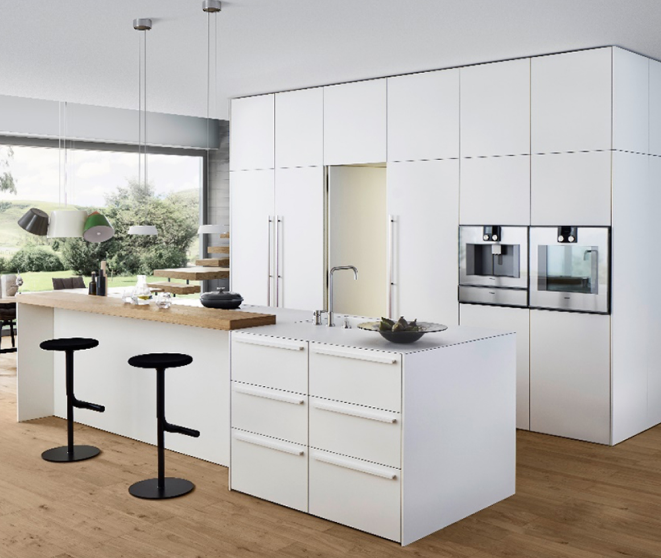
Key Takeaways
- A bespoke kitchen is the smartest investment when you plan to stay in your home for ten or more years, want to boost property value by up to 10–12%, or need a layout that standard units simply can’t deliver.
- Bespoke kitchens are a genuine long-term investment, typically lasting 20–25 years, with the option to refresh fronts and hardware rather than replacing everything.
- Quality craftsmanship, space optimisation, and a personal touch are the three main reasons a bespoke kitchen is worth the investment.
- A dream kitchen can be a smart investment both for resale – property value, buyer appeal – and for daily living: better flow, storage, and energy efficiency.
- The rest of this guide helps you decide whether a custom, bespoke kitchen design is right for your home and budget.
When Is a Bespoke Kitchen the Smartest Investment?
A bespoke kitchen earns its cost most clearly in a few situations: staying put long-term, genuine resale value on the table, or a home that won’t accept a standard layout. Working with McNally Living’s luxury kitchens, we see the same pattern repeatedly. Living in the property for at least eight to ten years means benefiting fully from this kind of investment, while upgrading before selling in a competitive market can add roughly 10–12% to resale value over a tired, dated kitchen. Lifestyle triggers matter too – growing families, people working from home all day, or serious cooks who’ve outgrown a flat-pack layout – and homes with tricky architecture, such as Victorian terraces or loft and barn conversions, are particularly good candidates, since standard units leave dead corners a bespoke layout can reclaim. Sometimes it’s simply the ‘dream kitchen’ factor: a clear vision for a handcrafted space you’ll enjoy daily.
What Makes a Kitchen Truly “Bespoke”?
Genuinely bespoke is a different proposition from a semi-custom or flat-pack upgrade: every cabinet, plinth height, and worktop run is built to order for that room, rather than adapted from standard 300/400/600/1000mm modules, beginning with detailed site measurements and a consultation that maps your daily routines – a coffee station, a baking zone, a kids’ snacks area – into the layout. The craftsmanship gap is real too: solid timber frames and soft-close hardware versus mass-produced chipboard, with cabinetry scribed to wonky walls, full-height larders to the ceiling, and solutions built around boilers or chimney breasts, plus real freedom in the finish – any paint colour, mixed materials, custom handles, and built-in features like banquette seating, much like the options across our own luxury kitchens.
How a Bespoke Kitchen Impacts Property Value
UK and Ireland market trends since 2020 have been consistent: a high-quality bespoke kitchen can add approximately 8–12% to property value, especially in mid- to upper-range homes, and estate agents tend to view it as a signal the rest of the house has been well maintained. A well-planned layout also photographs better for online listings – clear work zones, a generous island, cohesive finishes – while energy-efficient appliances appeal to eco-conscious buyers. Investing three to seven years before selling means enjoying it yourself while still presenting it in nearly-new condition, much as we see across our own luxury kitchens portfolio.
Quality Craftsmanship as a Long-Term Investment
Quality craftsmanship is the core reason bespoke kitchens are worth the investment over fifteen to twenty-five years. Many flat-pack kitchens installed around 2010–2015 are now visibly tired, whereas handmade bespoke kitchens from the same period often still look solid with only cosmetic updates, thanks to solid wood or birch ply, robust carcasses, dovetail drawers, and premium hinges rated for decades of use, as found in our official Leicht dealership cabinetry. Repairability matters too – doors can be repainted, handles swapped, and worktops upgraded around 2035 without replacing the core cabinetry, while superior finishes resist the chipping and delamination that plague cheaper kitchens. Bespoke kitchens cost more upfront in 2026, but spreading that cost across twenty-plus years often works out cheaper per year than replacing a budget kitchen twice over.
Space, Storage and Layout: Where Bespoke Really Pays Off
Space optimisation often delivers the most immediate, everyday return on bespoke design, especially in small or awkward rooms. Bespoke layouts follow the working triangle, or modern working zones, more precisely, positioning fridge, sink, hob, and prep areas to match how you cook, with smart storage doing the rest: floor-to-ceiling larders, deep pan drawers, integrated recycling, and hidden appliance garages. Custom kitchens also eliminate dead corners with units sized to the millimetre, while slimline or asymmetrical islands maintain safe walkways, or double as a breakfast bar and homework station. Done well, a modest 8–10m² city kitchen can feel more functional than a larger but poorly planned one – a difference felt immediately in daily life.
Style, Personal Touch and the “Dream Kitchen” Factor
Emotional satisfaction is a valid part of ‘smart investment’ too. Bespoke kitchens allow a coherent, timeless look that can span decades – a hand-painted Shaker kitchen installed in 2026 can be repainted from deep navy to warm stone in 2036 without full replacement. The personal touch shows up everywhere: custom colours, unique hardware, glazed display cabinets, integrated bookshelves, or a dedicated coffee or bar zone, often mixing handleless base units with traditional framed wall cabinets. A space tailored to how you actually live – kids’ snack drawers, a dog feeding station, a charging drawer, a laptop nook – creates daily joy, not just impressive photos, and helps you avoid short-lived trends, protecting your investment with classic proportions, much like the principles covered in our hub guide, Renovate or Relocate? Why a Luxury Kitchen Can Transform Your Home.
Cost, Budgeting and Deciding If It’s Worth the Investment
Cost ranges for bespoke kitchens in 2026 are where many readers decide whether to proceed. Entry-level bespoke typically covers simpler cabinetry with a handful of bespoke runs and standard worktops; mid-range fully bespoke extends to comprehensive custom cabinetry and integrated appliances throughout; high-end stretches to exceptional materials and bespoke joinery beyond the kitchen, the territory of our most exclusive kitchens. To assess whether it’s financially sensible, compare the projected value increase, your expected years in the home, and the cost of maintaining or replacing a cheaper kitchen. Phasing helps stretch a budget – keep existing appliances initially, choose durable but cost-effective worktops, or focus spend on cabinetry first – alongside a contingency of around 10–15% and works scheduled to minimise disruption. For many homeowners, better daily living, boosted property value, and reduced replacement costs make a bespoke kitchen a genuinely smart investment rather than a luxury splurge – a case explored further in our companion guide, How a High-End Kitchen Redefines Your Living Space.
FAQ
How long should a bespoke kitchen last before it needs replacing?
A well-built bespoke kitchen can easily last twenty to twenty-five years, with many only needing cosmetic updates – paint, handles, worktops – rather than full replacement. Lifespan depends on materials and craftsmanship, but bespoke kitchens consistently outperform flat-pack options over time.
Is a bespoke kitchen still worth the investment if I might move in 5 years?
Yes – a top-quality bespoke kitchen can still boost property value and saleability within a three-to-five-year window, especially in competitive markets. Focus on broadly appealing styles and neutral palettes, so the kitchen feels like a premium upgrade to the widest range of buyers.
Do I need a large kitchen for bespoke design to make sense?
Not at all – small and awkward kitchens often benefit most from bespoke solutions, since made-to-measure units reclaim space standard components waste. Compact city flats or cottages are a good example, where bespoke floor-to-ceiling storage delivers a genuinely huge functional upgrade.
Can I mix some off-the-shelf elements with bespoke cabinetry?
Yes, and it’s often sensible – combining bespoke cabinetry with standard appliances, sinks, taps, or a few modular units works well in plenty of kitchens, depending on budget. The key is making sure visible elements align in style and proportion, so the finished kitchen still feels cohesive.
What is the typical design and installation timeline for a bespoke kitchen?
A realistic timeline runs from two to four weeks for design and approvals, six to ten weeks for fabrication, and two to three weeks for installation and finishing. It’s worth planning several months ahead, especially around a specific season or family event.