

Key Takeaways
- A luxury kitchen renovation can often be the smarter choice over relocating, especially when it genuinely transforms how you use your existing living space.
- A high-quality kitchen renovation typically delivers strong resale value, often recouping a significant portion of its cost when the home is eventually sold.
- A luxury kitchen redesign improves daily life directly: more storage, a better workflow, and a space that becomes the genuine social heart of the home.
- Design choices such as open shelving, statement islands, and integrated appliances create a “new home” feeling without the upheaval of actually moving.
- This guide explains when it makes sense to renovate, when relocating may be the smarter option, and how to plan a luxury kitchen that future-proofs your home for years to come.
Should You Renovate or Relocate? The Decision Homeowners Face Today
Rising property prices, steep moving costs, and the fees and taxes that come with any house move have pushed many homeowners to ask a different question: instead of moving, could investing in one of McNally Living’s luxury kitchens solve the problem instead? For families who feel cramped or simply out of love with their kitchen, that question usually comes down to one room — staying and transforming the kitchen they already have, or taking on the cost and disruption of relocating entirely.
The core dilemma is rarely about the whole house. It’s about whether the kitchen, specifically, still works. For many families, the kitchen is the deciding factor in whether a home feels genuinely ‘forever-home ready’ or like somewhere they’ve simply outgrown. A thoughtfully designed luxury kitchen can deliver much of the same emotional ‘new home’ effect as relocating — often at a lower overall cost and with far less disruption to daily life.
This guide walks through the lifestyle benefits of renovating, the financial considerations including resale value, the design options that deliver the biggest transformation, and a simple framework for deciding between renovating and moving.
Why the Kitchen Is the Room That Changes Everything
The kitchen is the functional and emotional centre of most homes — the place where meals are cooked, work is done from a laptop at the counter, children do their homework, and friends gather for an evening. Upgrading this single room often transforms the experience of the entire house more thoroughly than renovating a bedroom or bathroom ever could.
Older or builder-grade kitchens tend to share the same pain points: too little counter space, limited storage, poor lighting, and an awkward layout that separates the kitchen from the rest of the living space. A premium kitchens redesign addresses every one of these directly — through bespoke layouts, better zoning between prep, cooking, dining, and social areas, and premium materials that genuinely change how the home feels, day to day. For exactly this reason, a luxury kitchen is usually the first place worth investing before considering costly structural additions or an expensive move.
Luxury Kitchen Renovation vs Moving House: The Numbers
Moving house comes with a long list of costs beyond the purchase price itself: agent fees, legal fees, stamp duty or other taxes, and removal costs, on top of the higher price tag that comes with stepping up to a larger property in the same area. Set against that, investing the same budget into a top-tier kitchen renovation often represents a considerably smaller outlay — with the bonus of staying exactly where you already are.
Resale value matters here too. Modern, high-spec kitchens remain one of the top features buyers look for, and they frequently recoup a high portion of their renovation cost, while also making the home noticeably easier to sell when the time comes. Picture a family weighing up £60,000–£80,000 in total moving costs against a £40,000–£50,000 designer kitchen that materially upgrades the home they already own — in many cases, the renovation delivers a comparable lift in how the home feels, for meaningfully less money.
There’s an opportunity cost worth weighing too: renovating allows a family to stay in a known neighbourhood — keeping the same schools, the same commute, the same community — while still gaining much of the ‘upgraded home’ feeling that moving would otherwise have provided. We explore this trade-off in more depth in our guide on When a Bespoke Kitchen Is the Smartest Investment.
How a Luxury Kitchen Transforms Your Living Space
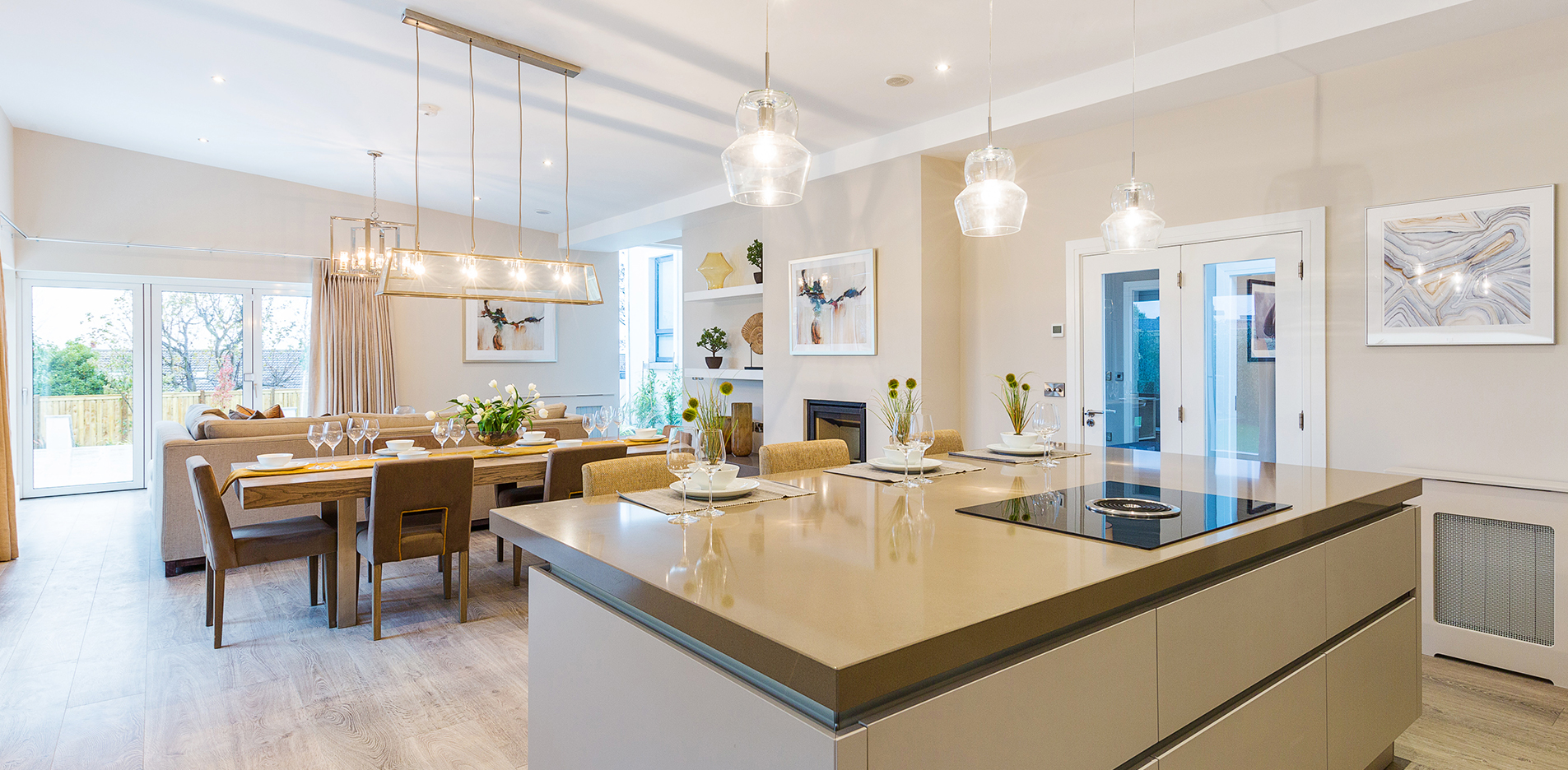
The impact of a luxury kitchen is felt far beyond its own four walls, especially when the space is linked to the dining and lounge areas around it. Removing or partially opening internal walls can create a modern, open-plan flow between kitchen, dining, and living areas, making the whole home feel larger and considerably more sociable.
Layout changes can also re-orient a home’s social hub around a central island, breakfast bar, or dining table, naturally encouraging family time and easy entertaining. Acoustic, lighting, and material choices — timber, stone, layered lighting — help the kitchen blend seamlessly into the rest of the living space, rather than feeling purely utilitarian. Put together, these transformations often leave homeowners feeling like they’ve moved into a genuinely more contemporary home, without ever changing their address. Our guide on How a High-End Kitchen Redefines Your Living Space looks at this effect in much greater depth.
Design Moves That Deliver Instant “New Home” Feeling
Certain design decisions give an immediate sense of luxury and freshness, even before the rest of the renovation is finished. A large stone or quartz island with seating, handleless cabinetry, floor-to-ceiling units, and integrated appliances all contribute to a clean, seamless look that reads as instantly upmarket.
Extending the same flooring from the kitchen into the dining and living spaces visually enlarges the whole home and creates a sense of continuity that’s hard to achieve any other way. Statement lighting — pendants over the island, concealed LED strips, dimmable circuits — turns the kitchen into a genuinely flexible space, equally suited to cooking, working, and evening entertaining. Together, these moves can make an existing property feel like a far higher-end new build, without a single brick being moved.
Function First: Storage, Workflow, and Everyday Ease
True luxury is as much about function as it is about finishes; the best kitchens make daily life easier and calmer, not just better-looking in photographs. A well-planned work triangle, or zoned workflow, minimises unnecessary movement between fridge, sink, hob, and prep areas, so cooking feels effortless rather than like an obstacle course.
More storage and smarter organisation — deep drawers, internal dividers, hidden recycling, tall larders — clear worktops and keep visual clutter to an absolute minimum. As Ireland’s official Leicht dealership, McNally Living designs every cabinetry run and island to this same standard, often incorporating dedicated zones for a coffee station, a breakfast larder, wine storage, or a built-in desk for homework or messages. Cumulatively, these improvements make a home feel genuinely more spacious and efficient, reducing the urge to move purely in search of ‘more room.’
Open Shelving vs Closed Cabinets
Balancing open shelving with closed cabinetry combines style with practicality. Open shelving is ideal for displaying cookbooks, ceramics, and everyday items, bringing personality and warmth into a luxury kitchen, while ample closed storage remains essential for hiding bulkier appliances, food packaging, and anything less attractive, keeping the overall look clean and calm.
Open shelving tends to work best near dining areas or above lower cabinets, styled with restraint for an uncluttered, curated effect rather than crowded display. Done well, this balance makes a kitchen feel both genuinely lived-in and high-end — appealing equally to current occupants and to future buyers.
Smart Storage for a Truly Luxury Feel
Specific storage innovations are often what distinguish a luxury kitchen from a standard renovation. Full-height pantry units, pull-out larders, corner carousels, internal drawers, and integrated bins and recycling systems all do quiet, unglamorous work that keeps the rest of the kitchen calm. Concealed appliance garages keep toasters, mixers, and coffee machines off the main worktops while remaining easily accessible.
Tailored storage for spices, baking trays, wine, or bulky cookware reduces daily frustration and makes the kitchen genuinely more enjoyable to use. When storage is carefully planned this way, even a modest-sized kitchen can feel generous enough to stay in, rather than becoming the reason a family starts to outgrow their home.
Finishes, Appliances, and Details That Drive Resale Value
Luxury kitchen decisions should balance personal taste with elements that appeal widely, should you ever decide to sell. Neutral, timeless cabinetry colours — soft whites, warm greys, natural wood — together with quality worktops in quartz, stone, or composite, tend to deliver the best resale value of any finish choices.
High-end, energy-efficient appliances from recognisable brands are strong selling points too, particularly when integrated neatly into the surrounding cabinetry. Tactile details signal quality to potential buyers in ways that are easy to underestimate: solid metal hardware, soft-close mechanisms, high-end taps, and premium splashbacks or tiles — the kind found throughout our own luxury kitchens. Framed this way, these choices become an investment in both daily enjoyment and future resale — making renovation a genuinely compelling alternative to relocating.
Energy Efficiency and Long-Term Running Costs
A modern luxury kitchen should reduce running costs as well as look impressive, appealing to cost-conscious and environmentally minded buyers alike. A-rated or better appliances, induction hobs, efficient extraction, and well-insulated windows and doors where relevant all contribute meaningfully to lower bills over time.
LED lighting throughout — task, ambient, and accent layers — works as both a design feature and a genuine energy-saving measure. These sustainable choices can become a key selling feature in their own right, particularly in markets where energy performance certificates increasingly influence buyer decisions. Lower bills and better environmental performance both add directly to the long-term case for staying and renovating, rather than moving.
When Renovating Makes More Sense Than Relocating
The decision depends on both emotional and practical factors, not budget alone. A luxury kitchen renovation tends to be the smarter move when you genuinely love your neighbourhood, your home has unrealised potential, and your main frustrations are kitchen-related — layout, storage, or style, rather than the house as a whole.
Properties with good structural bones, a decent overall size, and an underused separate dining room are often ideal candidates for a kitchen-led transformation. Renovating also brings far less disruption than selling — no moving schools, no changing commute, no adapting to an unfamiliar area. It’s worth viewing the existing home as a canvas that can be significantly upgraded, particularly through a kitchen that anchors the rest of the living space around it.
When Moving Might Still Be the Right Choice
To stay balanced, it’s worth acknowledging the cases where relocating genuinely is more sensible. Severe structural limitations, ongoing damp or foundation problems, no real potential to open the kitchen into the living area, or a location that no longer suits work, schools, or lifestyle are all good reasons to consider moving instead.
If even a well-planned luxury kitchen can’t address fundamental size or layout restrictions across the whole home, moving may genuinely offer better long-term satisfaction. It’s worth weighing emotional attachment against practical considerations like space needs over the next ten to fifteen years, and comparing a realistic renovation plan and budget against the full real cost of moving before making a final decision.
Planning Your Luxury Kitchen Renovation
Planning a luxury kitchen renovation generally moves through a few clear stages: assessing your needs, setting a realistic budget, choosing a designer or contractor, and mapping out a workable timeframe. It’s worth starting with how you actually live and cook — the number of people cooking at once, your entertaining style, your storage habits, and future needs such as children growing up or ageing in place.
When it comes to prioritising spend, cabinetry and layout should generally come first, followed by worktops and appliances, with decorative elements and some tech features treated as flexible extras that can flex with the budget. It’s equally important to plan for temporary disruption — setting up a temporary kitchen area and sequencing the works to minimise downtime — and to think at least ten years ahead, so the finished kitchen remains functional and genuinely appealing well into the future, reinforcing the case for renovating rather than relocating. You can see this long-term thinking across our own luxury kitchens portfolio.
Key Questions to Answer Before You Commit
A handful of practical questions can clarify a renovation brief enormously. What frustrates you most about your current kitchen? How long do you plan to stay in this home once the renovation is finished? How important is resale value compared with your own personal taste?
It’s worth setting clear budget boundaries early, along with a list of genuine must-have features — an island, a pantry, more storage, open shelving, integrated seating — and being honest about what could be compromised if costs start to rise. Gathering inspiration images and building a wish-list ranked by priority makes the whole design process considerably easier to manage. Clear answers to these questions make it far easier to see whether a luxury renovation will genuinely deliver what moving would otherwise have provided.
FAQ
How much should I budget for a luxury kitchen renovation versus moving?
A true luxury kitchen typically starts at a higher price point than a basic renovation, with the overall figure depending heavily on size, materials, and appliance choices — but it still usually undercuts the total cost of moving once fees, taxes, legal costs, and a higher purchase price are all added up. It’s worth pricing out both options properly: get real quotes for the renovation, and estimate every moving-related cost as well, so the comparison is genuinely like for like. A contingency of around 10–15% in the renovation budget is also sensible, to cover unforeseen issues once work begins.
Will a luxury kitchen really increase my home’s resale value?
Modern, high-quality kitchens are consistently among the top features buyers pay a premium for, often speeding up a sale and reducing the need for price reductions further down the line. Exact returns vary by market, but a well-designed, broadly appealing kitchen typically recoups a significant portion of its cost when the home is eventually sold. The key is choosing relatively timeless finishes rather than overly niche trends, if resale value is one of your main goals.
How long does a luxury kitchen renovation usually take from start to finish?
Planning and design can take anywhere from several weeks to a few months, depending on how quickly decisions are made and how complex the design is. On-site work — from demolition through to final installation — commonly runs from several weeks to a few months too, depending on structural changes, bespoke joinery, and how much plumbing and electrics need to move. It’s worth building in extra time for custom orders and potential delays, so you’re never forced into rushed decisions or an extended stretch of temporary living arrangements.
Can I stay in my home while my new kitchen is being installed?
Many homeowners do stay in place throughout the works, but it’s worth being prepared for noise, dust, and limited cooking facilities for part of the project. Setting up a temporary mini-kitchen in another room — a fridge, a microwave, a kettle, and some basic storage — makes day-to-day life considerably more manageable. For very extensive structural work, or where there are particular health considerations, a short stay elsewhere can be the more comfortable option.
How do I future-proof my kitchen so I don’t feel the need to move later?
Focus on a flexible layout, generous storage, and durable, neutral finishes that can be refreshed with smaller updates over time rather than a full re-fit. It’s worth allowing for evolving technology too — space for future appliances, charging points, and smart-home integrations — without overcommitting to short-lived fads. Thinking about accessibility and multi-generational use, such as varied counter heights, wide circulation spaces, and good lighting, helps ensure the kitchen supports your household through different life stages, not just the one you’re in now.