

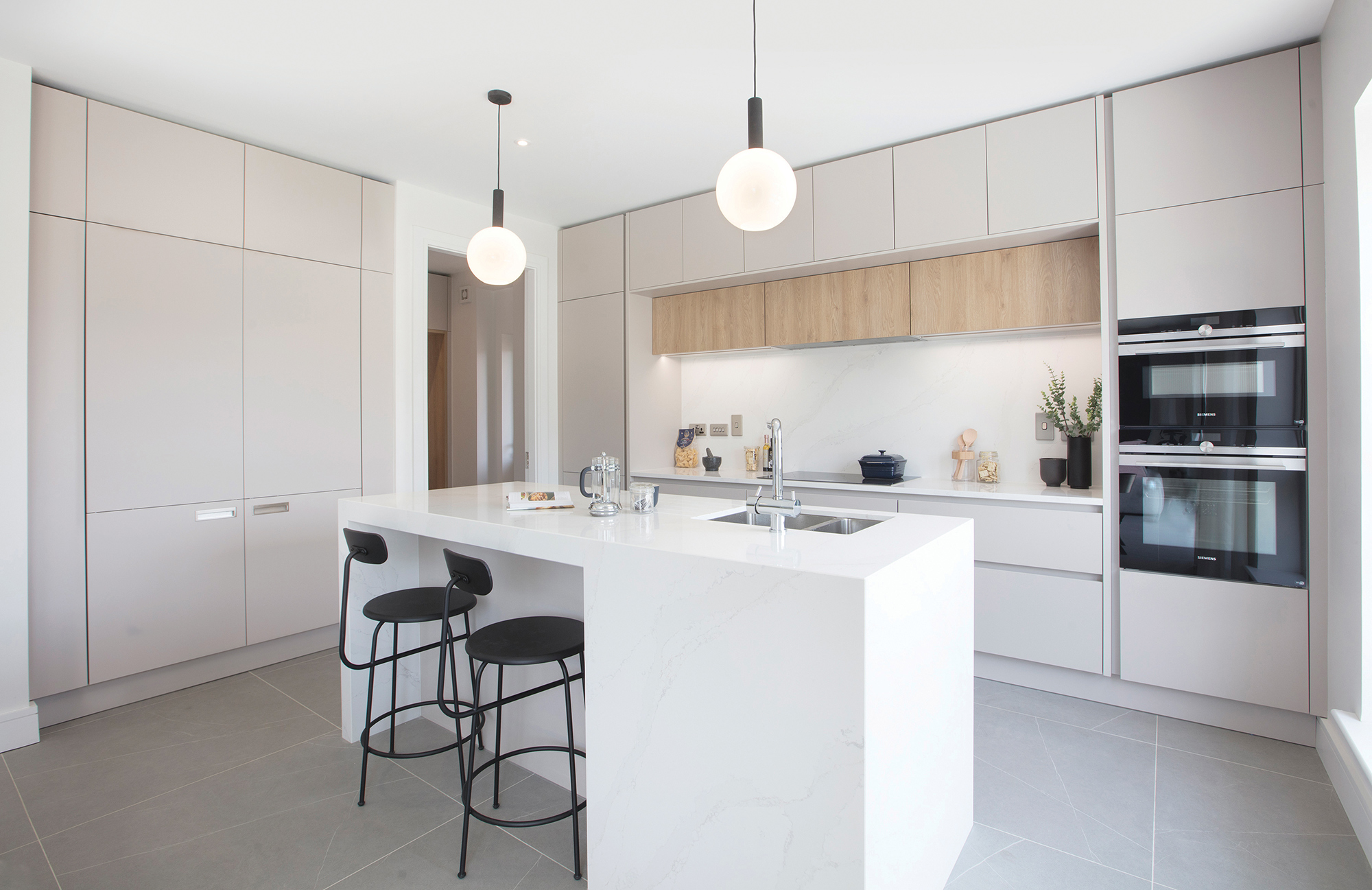
Changing your mind partway through a kitchen project is more common than you might think, and nothing to feel awkward about. When designing luxury kitchens, ideas naturally evolve as you see drawings and samples. What matters is understanding how a change affects time, cost and scope, and how you stay in control.
Key Takeaways
- Changing your mind mid-project is normal, but it always affects timeline, cost or scope in some way.
- Small tweaks within the current design stage are often absorbed; larger changes become new scope with a revised quote.
- Your designer keeps control with a change log, updated drawings, a revised schedule and fresh sign-off.
- Swapping a door colour before sign-off is simple; adding an island after cabinets are ordered is not.
- Clear communication, written agreements and regular check-ins keep the project on track.
Introduction: Why Changing Your Mind Mid-Project Is Normal
Once you see detailed drawings, 3D visuals or door samples, it’s natural to realise you want something different. “Mid-project” usually means after the first consultation and initial approvals, when design work is underway. A change isn’t a failure of the design process, but it does ripple through time, budget and priorities.
When a Change Is “No Big Deal” vs. a True Scope Change
Not every tweak is treated the same. Low-impact changes, such as swapping handle styles or a cabinet colour during design revisions, can often be absorbed within the current stage. High-impact changes, such as adding an island or moving the sink after the layout and survey are approved, need new design time and a revised quote. Your designer decides which is which by weighing effort, risk and how much approved work must be redone.
What Actually Happens the Moment You Change Your Mind
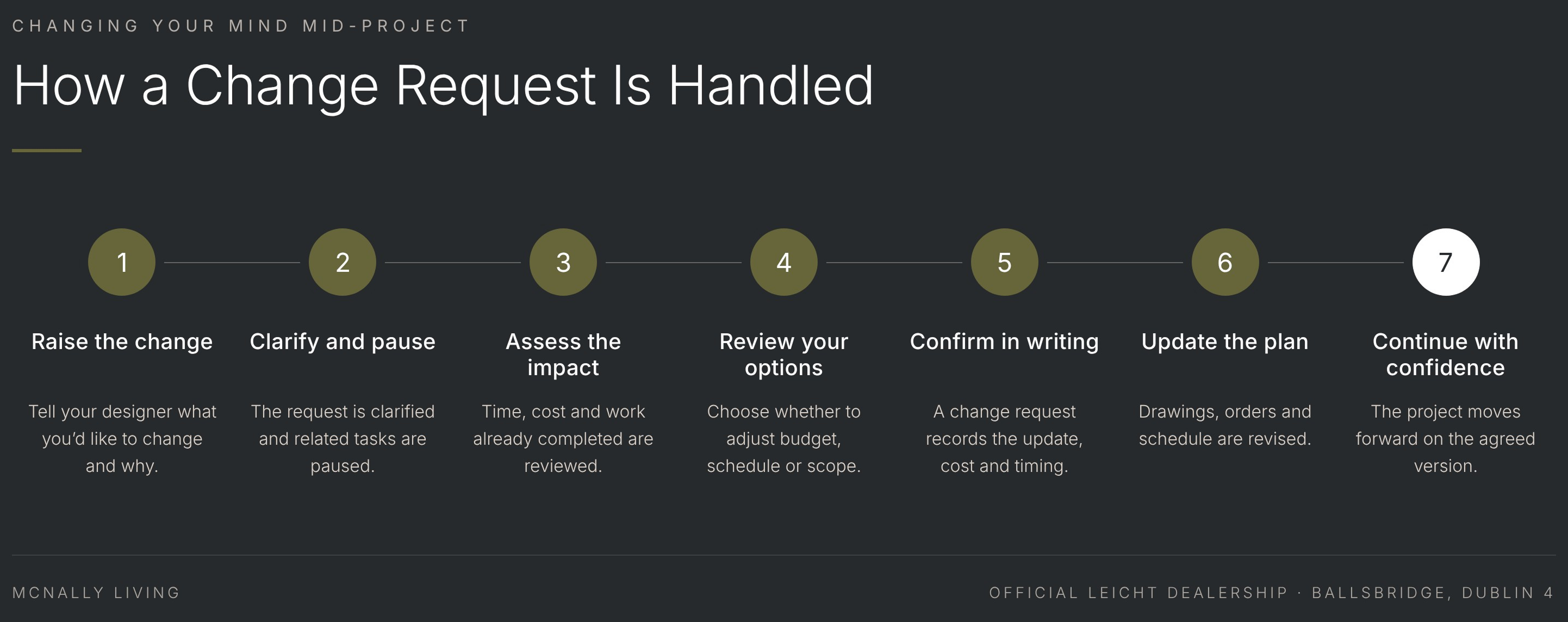
When you say “we’ve had a rethink”, your designer will typically:
- clarify exactly what you’d like instead
- check what’s already been drawn, approved or ordered
- pause related tasks, such as finalising drawings or placing orders
- roughly size the impact with the team
The project plan is then marked up to show what might be scrapped, reworked or added. This first stage should be calm and fact-finding, so you feel heard and the project stays grounded.
How a Change Request Is Handled
How We Evaluate the Impact on Timeline and Budget
Before anything is confirmed, the impact is assessed around three questions: how much finished work becomes obsolete, what new work or products are needed, and how the installation date is affected. For example, switching to a different worktop after templating may push fitting back while the new one is made. The assessment leads to clear options, such as adjusting the budget or the schedule, so you choose the trade-off.
Formal Change Requests: Putting Changes in Writing
Once a change crosses a certain threshold, it becomes a formal change request recording the new requirement, affected items, updated estimate and any timeline shift. This protects both sides: you know exactly what the change costs, and the team has written approval before starting rework. Each request is typically tracked in a change log with the date, decision maker and status.
How Mid-Project Changes Affect the Design Process
Kitchen design moves in stages, from initial layout to 3D visuals, survey, final drawings and ordering, and timing shapes the impact. Moving a tall larder while the layout is still a sketch is easy; doing it after detailed drawings are finished means reworking elevations, appliance positions and electrics. In luxury kitchens, where every panel is made to measure, a late change of colour scheme ripples through doors, panels and plinths. Early design reviews, seeing your kitchen in 3D before it’s built and clear sign-off milestones all reduce late pivots.
How We Handle Clients Changing Their Minds Repeatedly
One change is expected, but constant shifts drain momentum. A project may limit major revisions per stage or agree set points for changes, and your agreement may define what counts as a revision round; your designer will confirm. The aim is predictability, not punishing change.
Communication: Setting Expectations Before and During Changes
The tone is set early, ideally from your very first design meeting, with a clear conversation about what happens if you change your mind. Regular check-ins keep corrections small. When requesting a change, focus on the goal, such as “I need more prep space”, rather than a fixed solution. Always confirm decisions in writing, through a summary email or updated drawings.
Real-World Examples of Mid-Project Changes
A couple decides during design reviews to swap a breakfast bar for tall storage; because they raise it before sign-off, the layout is adjusted with no delay. Another client asks for a different door finish after cabinets are ordered, leading to added cost and a later installation date. When and how you ask for a change matters as much as what you change.
How a Project Manager Keeps Control When the Direction Shifts
Whether it’s your designer or a project manager, their role is to translate a new idea into tasks, estimates and trade-offs. Tools include an updated plan, re-prioritised tasks, a risk note and revised check-ins. They protect must-haves, such as appliance positions and services, while deferring lower-value requests. For the full sequence, see The Bespoke Kitchen Process, Step by Step: From Consultation to Installation.
Minimising the Need for Last-Minute Design Changes
You can’t eliminate change, but you can reduce late surprises. Spend time on the brief, test your layout in 3D and make sure everyone in the household agrees before approving. List must-haves and nice-to-haves so it’s clear what can move, and treat final sign-off before ordering as a firm checkpoint. As an official Leicht dealership, McNally Living works with made-to-order cabinetry, and premium kitchens are built precisely to signed-off drawings. In luxury kitchens, careful early decisions always pay off.
FAQ
Will I always be charged extra if I change my mind mid-project?
Not always. Small adjustments within the current stage are often absorbed, while larger changes usually need a revised quote. Your designer should flag when a request becomes chargeable and confirm the cost before extra work begins.
Can changing my mind mid-project delay my installation date?
Any change that adds work or replaces ordered items can affect the schedule. Your designer will outline options, such as adjusting the timeline, the budget or lower-priority items.
What if I only realise what I really want after seeing the first designs?
That’s common, and it’s why review rounds happen early. Give honest feedback as soon as possible so major changes happen before significant work is completed.
How many times can I change my mind before it becomes a problem?
Many agreements define a set number of design revision rounds; your designer will confirm what yours includes. Further rounds are usually possible but may carry their own time and cost.
What’s the best way to request a change so it goes smoothly?
Explain what isn’t working, what you want to achieve and any deadlines. Share photos or sketches so the change can be scoped accurately.