

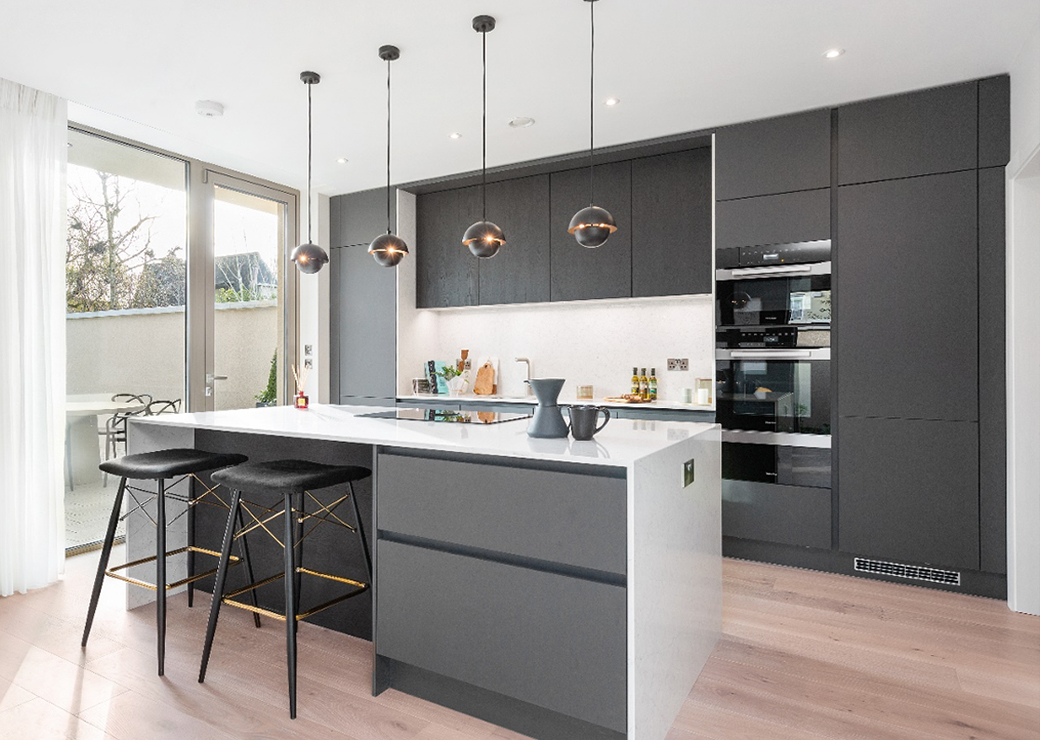
Key Takeaways
- Truly luxury kitchen trends balance beauty with how the kitchen actually works in daily life – not just how it photographs.
- Bespoke cabinetry, layered lighting, high-performance worktops, well-planned islands and layouts, and genuinely useful integrated appliances are the investments that age well.
- All-grey or all-white schemes, oversized islands, fully open-plan layouts with no zoning, high-maintenance surfaces like real marble, and showy but impractical fixtures are trends worth treating with real caution.
- This guide is written with an eye on design choices that still feel timeless five to ten years from now, not just for the current season.
Introduction: Luxury Kitchen Trends That Really Earn Their Keep
Kitchen design moves quickly, but a genuinely luxury kitchen shouldn’t. Working across McNally Living’s luxury kitchens, we see the same pattern again and again: the kitchens that still feel right years later are the ones where every design choice was tested against daily life, not just against a moodboard. This guide is for homeowners planning a dream kitchen or a major renovation in the near future, and it sets out which luxury kitchen trends are genuinely worth investing in, and which are better treated with caution.
We’ll cover the trends worth investing in first, because they add lasting value, comfort, and resale appeal; then the trends worth treating with caution, because they tend to date quickly or create problems in daily life; and finally a short framework for choosing what’s genuinely right for your own home, household, and budget. This isn’t about chasing every new kitchen trend – it’s about making design choices you, and a future buyer, will still be glad of in ten or fifteen years. For the broader principles behind that kind of longevity, our companion guide, Timeless Kitchen Design: What Never Goes Out of Style, is well worth reading alongside this one.
Luxury Kitchen Trends Worth Investing In
These are the trends worth treating as an investment rather than a fashion choice. Leading kitchen designers have used them consistently over the past few years, and all the signs suggest they’ll continue to age well, supporting both everyday enjoyment of the space and resale value down the line.
Bespoke Cabinetry & Tailored Storage
Bespoke cabinetry sits at the heart of any genuinely high end kitchens. Unlike off-the-shelf units, custom joinery maximises every millimetre of a room – particularly valuable in awkward layouts or period properties – and makes room for deep pan drawers, pull-out larders, internal dividers, integrated bins, appliance garages, and hidden coffee stations, all built around how a household actually cooks. As Ireland’s official Leicht dealership, McNally Living builds cabinetry along exactly these lines, favouring richer materials – walnut, oak with visible grain, hand-painted doors – over a formulaic, builder-grade look, and it also makes smart appliances and layered lighting far easier to integrate cleanly.
Layered Lighting That Changes With the Day
Layered lighting – ambient, task, and accent – has moved well beyond trend status in luxury kitchens; it’s now essential. Think dimmable ceiling downlights, under-cabinet LED strips, pendants over the island, and in-cabinet lighting for glass-fronted units. Picture a Saturday where the kids do homework at the island under crisp task lighting, then a few hours later the same island is lit by warm pendants for a dinner party – that flexibility is exactly why layered lighting earns its place in the budget, especially with smart controls and warm-colour-temperature LEDs that flatter wood and stone rather than flattening them.
High-Performance Worktops & Splashbacks
Worktops and splashbacks need to survive serious cooking, not just look good on installation day. Sintered stone such as Dekton or Neolith, high-quality quartz, and durable porcelain slabs that mimic marble or concrete all deliver a luxury look with genuine resilience – look for stain resistance, heat tolerance, low porosity, and easy clean-up after entertaining. Real marble is genuinely beautiful but high maintenance in a busy family kitchen, so it’s usually better as a limited accent than across a whole worktop run. For splashbacks, full-height stone gives a seamless look, while a carefully chosen feature tile adds character without locking the kitchen into one era.
Well-Planned Kitchen Islands & Social Zones
The kitchen island remains a core kitchen trend, but it only earns its cost when sized and planned correctly. A genuinely multifunctional island might combine an integrated hob or sink, breakfast bar seating, a wine cooler, concealed power sockets, and extra prep surface – without becoming an obstacle. A massive island unit can break the kitchen’s workflow entirely, so keep clearances of roughly one to one-point-two metres around it. A thoughtful, mid-sized island bridges cooking and living spaces beautifully, especially in open or semi-open plans; an oversized slab quickly starts to feel like an obstacle course instead.
Layouts That Suit Your Home: Galley, L-Shaped & U-Shaped
One of the most valuable “trends” in luxury kitchen design isn’t a material at all – it’s choosing a layout that matches your home’s architecture and your daily life rather than a magazine photo. A modern galley kitchen suits keen cooks and city apartments and keeps clutter off show; an L-shaped kitchen with a small island or table suits homes that want openness and connection for two to four people; U-shaped kitchens are a premium option in larger rooms, ideal for generous worktop space and clearly defined cooking zones. No surface finish or appliance can fix a poorly considered layout – this is the design choice most worth professional input and budget.
Integrated but Practical Appliances & Smart Features
The appliance trends genuinely worth paying for add real value to daily life: steam ovens, induction hobs with integrated extraction, built-in coffee machines, and boiling-water taps. Brands such as Miele, Gaggenau, BORA, and Quooker are consistently held up as high-performance choices for kitchen design at this level. Integrated appliances and matching panels create a calm, cohesive look, but choose models that are easy to service and large enough for your household. Smart features are worth paying for when they simplify cooking rather than adding gimmicks – app-controlled ovens, fridge cameras, programmable extraction – and integration should never compromise ventilation, safety, or long-term access for repairs.
Luxury Kitchen “Trends” To Treat With Caution or Avoid
Some kitchen trends from the past several years are now looking tired or impractical in high end kitchens. Avoiding them doesn’t mean settling for a boring kitchen – it simply means placing trend-led elements where they’re easy to update later. Many of these pitfalls trace back to prioritising how a kitchen photographs over how it feels after five years of hard daily use.
All-Grey, All-White & Formulaic Colour Schemes
All-grey kitchens and stark all-white schemes had their moment, and that moment has largely passed: all-white shows every mark and fingerprint, while all-grey can feel flat and cold, particularly in north-facing rooms. A better approach introduces warmth and contrast – creams, stone tones, desaturated greens, natural wood – and treats grey or white as part of a layered palette, such as grey lower cabinets with warm oak accents, rather than wall-to-wall monotone. A subtle terracotta or soft burgundy confined to an island or larder adds colour without locking the whole kitchen to one era.
Oversized Islands & Poorly Planned Open-Plan Spaces
The rush toward fully open-plan living and ever-larger islands has created real problems in plenty of homes: acoustic issues, lingering cooking smells, long walking distances between sink, hob, and fridge, guests perched in the cooking zone, and nowhere to hide mess during a dinner party. The fix is usually simpler than people expect – a slightly smaller island, two islands with a gap between them, or a buffer zone such as a breakfast bar or half-height partition. Semi-open concepts using pocket doors, glazed partitions, or a butler’s pantry that closes off after cooking are a smart current approach: a genuinely luxury kitchen should offer both connection and the option of calm, not force the whole living area to smell like dinner.
High-Maintenance Surfaces: Real Marble, Soft Woods & High-Gloss
Some of the most photogenic materials are the hardest to live with day to day. Real marble worktops etch easily from lemon and wine, scratch quickly, and need regular resealing. Natural or engineered wood flooring brings similar trade-offs in heavy-use kitchens – water damage, staining, costly refinishing – compared with porcelain or luxury vinyl alternatives. High-gloss cabinetry shows fingerprints, hairline scratches, and reflections that highlight every imperfection, particularly in busy family kitchens. A matte or satin finish paired with marble-look stone delivers the aesthetic with far easier upkeep.
Showy Fixtures That Don’t Work in Daily Life
Some statement fixtures look impressive in photographs but create real ergonomic problems day to day. Oversized chef-style spring taps can cause daily splashing and feel heavy and awkward compared with a compact pull-out mixer or a boiling-water tap. Butler and Belfast sinks have a similar issue: deep bowls that can cause back strain, stain-prone enamel, and fewer accessory options than a modern undermounted stainless or composite sink. Dark-painted cabinetry and black taps or hardware used throughout fall into the same trap – striking in photos, unforgiving for fingerprints and cleaning. Use one sculptural tap or sink as a genuine focal point, and keep the rest practical and timeless.
Fully Integrated Everything (When It Hurts Capacity)
Fully integrated fridges, freezers, and dishwashers hidden behind cabinetry doors have an undeniable sleek appeal, but the drawbacks are worth weighing up: reduced internal capacity, heavy decorative doors that strain hinges, and genuine difficulty repairing or replacing the units. In a luxury kitchen used for entertaining, a slightly larger freestanding fridge-freezer or separate wine fridge often works harder than a perfectly hidden but cramped integrated model. A good compromise is a panel front for the dishwasher and under-counter fridge, alongside one visible statement fridge or drinks unit. True luxury is how well a kitchen performs during a big family weekend or a party – not whether every appliance disappears from view.
How to Choose Luxury Kitchen Trends That Suit Your Home
It’s worth shifting the question from “what’s in and what’s out” to “what’s right for my life, my house, and my budget.” Start with a proper wishlist: who cooks, how often, how many people are regularly in the kitchen, your entertaining habits, and where storage currently falls short. From there, think in layers – get the layout and storage right first, then materials and colours, and only then sprinkle in statement pieces. Permanent elements such as cabinetry, worktops, and flooring should lean timeless, while easily updated pieces like bar stools, smaller lighting, and paint colours can follow shorter-lived design trends without much risk. For more on building that resilience in from the outset, our guide on How to Future-Proof Your Kitchen Design walks through the process step by step. It’s also worth future-proofing a few practical details while planning – accessible appliance heights, enough task lighting to allow for eyesight changes over time, and durable finishes that will still look good in ten to fifteen years. You can see many of these principles already at work across our own luxury kitchens portfolio.
FAQ: Luxury Kitchen Trends & Long-Term Investment
These FAQs cover a few practical questions that come up often and aren’t fully addressed above.
How much of my kitchen budget should go on “trend” features?
As a rough guide, put 60–70% of the budget toward core, long-life elements – layout work, cabinetry, worktops, flooring – around 20–30% toward appliances, and 10–20% toward changeable trend items like lighting, hardware, and decor. That balance keeps the kitchen feeling solid and current even if you refresh colours or hardware in seven to ten years, so resist skimping on hidden quality – cabinet carcasses, hinges, drawer runners – to afford a dramatic but non-essential feature. In truly high end kitchens, the share spent on bespoke cabinetry and worktops is often even higher, since these drive both daily pleasure and resale value.
Can I still use grey in my kitchen without it feeling dated?
Grey isn’t forbidden, but it now needs more thought than the flat mid-grey schemes that were everywhere a few years ago. Warm greys with beige or taupe undertones work well, particularly when restricted to lower cabinets or the island and paired with warm woods and textured stone. Small amounts of charcoal or graphite add real sophistication against lighter walls and worktops. Test any grey in your own light before committing, and combine it with layered lighting so the space never feels cold.
Is a galley kitchen too old-fashioned for a luxury home?
Not at all – a galley kitchen is a classic layout that has returned as a genuinely premium choice, particularly in city apartments and homes where serious cooking is a priority. With bespoke cabinetry, high-end appliances, and good lighting, a galley kitchen can feel thoroughly contemporary and luxurious. The trade-off is less room for island seating and big gatherings, but for focused cooking and catering it can outperform plenty of trend-led open-plan kitchens – proof that layout quality, not fashion, is what determines whether a kitchen feels genuinely high end.
Which kitchen trends add the most resale value?
Buyers consistently value high-quality cabinetry, durable worktops, a functional island, efficient appliances, and abundant storage more than hyper-specific colours or decorative fads. Neutral-but-warm palettes, integrated lighting, and practical layouts – especially L-shaped with an island, or U-shaped – tend to be seen as safe, valuable investments. Keep bold, personal statements to elements that can be repainted or replaced without ripping out the whole kitchen, since well-known appliance brands and visible craftsmanship in the joinery also tend to reassure buyers about quality.
How often do luxury kitchen trends change, and when should I update?
Surface-level trends – colours, hardware styles, smaller lighting fixtures – tend to cycle every five to seven years, while core layout and cabinetry trends shift far more slowly, often over twelve to twenty years. Design a kitchen so that only paint colours, handles, and accessories need updating to refresh the look, rather than ripping out the cabinets entirely. If the layout still works but the finishes feel tired, a light renovation after ten to fifteen years – new worktops, taps, and lighting – is often enough, and designing with durability in mind now pushes any major update much further into the future.