

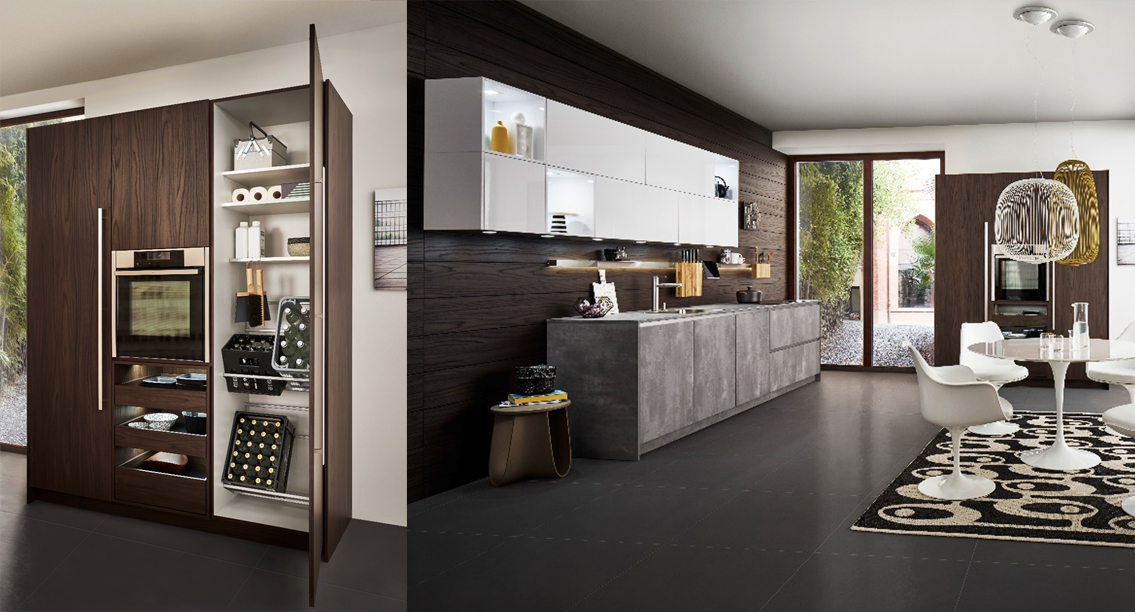
Key Takeaways
- Future-proofing your kitchen means combining timeless style, flexible layouts, and robust, energy-efficient appliances so the space still works beautifully ten to twenty years from now.
- Investing in high-quality materials and reliable brands now usually costs less than several rounds of repairs and updates later.
- Flexible layouts, a well-planned kitchen island, and smart storage are the backbone of a future-proof kitchen that can adapt to kids arriving, teenagers studying, or working from home.
- Planning for technology (extra sockets, data points, hidden charging, smart appliances) and sustainability (efficient appliances, LED lighting, water-saving taps) is essential from the outset, not an afterthought.
- Balancing current trends with timeless foundations means colour and décor can change freely, without ever needing to rip out cabinets and worktops.
Introduction: What Does It Mean to Future-Proof Your Kitchen?
Future-proofing your kitchen means designing a space today that still looks current and works perfectly ten, twenty, even thirty years from now. It’s the same long-term thinking behind every one of McNally Living’s luxury kitchens: rather than following whatever’s trending right now, a future-proof kitchen design anticipates changes in family size, cooking habits, home working, and technology long before they happen.
In practice, that might mean planning the wiring for an induction hob now, even if you’re still cooking on gas, so the kitchen is ready the moment you want to switch. Future-proofing touches every layer of the design – layout, high-quality materials, energy-efficient appliances, technology integration, and easy-to-refresh style elements – working together so the kitchen keeps pace with your life, rather than the other way around.
Start With How You’ll Live in the Kitchen Over the Next 10–20 Years
Future-proofing starts with honest lifestyle planning, not cabinet colours. It’s worth thinking five, ten, and twenty years ahead: young professionals planning for children, families anticipating teenagers and later an empty nest, or owners planning to age in place. Before any design decision, it helps to work through cooking frequency, entertaining habits, home-working needs, and accessibility requirements – the answers shape almost everything that follows.
Different life stages change layout choices in concrete ways: wider walkways to accommodate a pram or, later, a wheelchair; a lower breakfast bar zone that works for children and ageing parents alike. Skipping this step is a common, costly mistake – a kitchen fitted with tiny worktops and no seating to save space often forces an expensive redesign within just a few years, once a growing family or a change in routine exposes exactly what was missing.
Balance Timeless Kitchen Design With Current Trends
The most future-proof kitchens mix classic, timeless foundations with easily changeable trend-led details. Shaker or flat-front cabinetry, simple handle designs, and neutral palettes – warm whites, soft greys, greige – form a foundation that will still feel modern many years from now, exactly the principle behind our guide to Timeless Kitchen Design: What Never Goes Out of Style. Popular current trends, such as deep green cabinets, fluted glass, or brass hardware, are worth embracing too – just in accents rather than across every surface.
Splashbacks, wall paint, bar stools, and lighting are the real ‘trend carriers’ in a kitchen: they can be updated in a weekend without major building work. A genuinely future-proof kitchen avoids overly specific fad features – ultra-glossy coloured cabinets or novelty worktops, for instance – that quickly date the whole room and are far harder to undo.
Invest in High Quality Materials That Age Well
Investing in high-quality materials is one of the most effective ways to future-proof your kitchen, reducing replacements and repairs for years to come. Durable worktops such as quartz, granite, and high-pressure compact laminate resist stains, scratches, and heat over decades, while solid or plywood cabinet carcases, robust hinges, soft-close runners, and moisture-resistant finishes stand up to genuinely daily use. As Ireland’s official Leicht dealership, McNally Living builds every one of our luxury kitchens on exactly these standards of carcase, hinge, and finish quality.
Flooring deserves the same care: porcelain tile, luxury vinyl tile (LVT), and engineered wood all suit a long-term, future-proof kitchen design, each with clear advantages for a busy family home. As a rule of thumb, it’s worth spending more upfront on worktops, hinges, and flooring – the elements that are hardest and most disruptive to replace – and saving on details like handles or open shelving, which can be swapped later for very little cost.
Design Flexible Layouts and a Multi-Functional Kitchen Island
Flexible layouts are central to future-proofing your kitchen, allowing the space to adapt from a couple’s kitchen to a family hub to a home-office base without rebuilding. L-shaped, U-shaped, galley, open-plan, and broken-plan layouts can all be made more flexible with movable furniture and clearly defined zones, rather than fixed, single-purpose space.
The kitchen island is one of the most valuable future-proof elements precisely because it can serve as a prep zone, casual dining spot, homework desk, or work-from-home station, especially in our exclusive kitchens with integrated sockets and storage built in. Aim for at least 1,000–1,100mm of walkway around an island to keep circulation comfortable as needs change, and consider details that allow later reconfiguration – freestanding pantry units, non-load-bearing partition walls, modular storage systems – so the layout can evolve without a full rebuild.
Prioritise Functionality, Ergonomics, and Smart Storage
A future-proof kitchen has to work effortlessly day to day, minimising bending, reaching, and clutter for everyone who uses it. Basic ergonomic principles go a long way: worktop heights around 900mm, ovens at eye or chest level, and dishwashers raised slightly where possible to reduce bending for users of any age.
Smart storage – deep pan drawers, pull-out larders, corner carousels, drawer organisers – can adapt as your cooking style changes over the years, while zoning the kitchen into prep, cooking, cleaning, and storage areas updates the classic working triangle into flexible ‘work zones’ suited to modern life. Picture the difference between a kitchen with one cramped worktop and nowhere to plug in a laptop, and the same room reorganised into a defined prep zone, a calm corner for messages between cooking, and proper storage for everything in between – the layout barely changes, but daily life in it improves enormously.
Build in Technology and Energy-Efficient Features From the Start
Technology changes quickly, so future-proofing your kitchen really means planning the infrastructure – power, data, ventilation – even if you delay buying some of the gadgets themselves. That means extra double sockets, USB-C and wireless charging points, data cabling in any spot where Wi-Fi might be weak, and dedicated circuits for ovens and induction hobs.
Energy-efficient appliances – A-rated fridges, induction hobs, eco dishwashers, well-insulated modern ovens – reduce running costs and environmental impact for years to come. Smart home integrations are worth including when they genuinely help rather than feeling like gimmicks: think smart lighting scenes, app-controlled ovens, and voice-activated extractors. LED lighting, meanwhile, should be standard across task, ambient, and accent layers – a small detail with an outsized payoff in long life and low energy use.
Plan for Sustainability and Low-Maintenance Living
Sustainability is now a core part of future-proofing your kitchen, affecting resale appeal and everyday comfort as energy prices and regulations continue to evolve. FSC-certified timber, recycled or composite worktops, and low-VOC paints all support better indoor air quality alongside their environmental benefits, while water-saving fixtures – aerated mixer taps, boiling-water taps that cut down on kettle use, and dishwashers that use minimal water per cycle – quietly reduce both bills and waste.
Low-maintenance finishes belong in the same category: matt, fingerprint-resistant cabinet fronts, easy-clean induction hobs, and integrated splashbacks all save real time over years of daily use. It’s worth thinking of sustainability and low maintenance less as ethical add-ons and more as straightforward time and cost savings, stacked up over ten to fifteen years.
Design for Change: Adaptable Details and Easy Updates
The best future-proof kitchens make it simple to refresh the style without structural work or replacing high-cost items. Handles, pendant lights over the kitchen island, bar stools, wall colour, and open-shelf décor are all genuine tools for a quick style update – alongside modular shelving, clip-in splashback panels, or removable wallpaper in a dining area, all of which let the look evolve with minimal disruption.
It pays to plan wall space, plug locations, and ceiling points early, so it stays simple to add or reposition lighting, shelving, or a media screen later on. Think of a genuinely future-proof kitchen as a stable ‘shell’ with interchangeable layers – the same thinking that underpins the trend choices covered in our guide to Luxury Kitchen Trends Worth Investing In (And Ones to Avoid) – so that most updates are possible in a weekend, rather than requiring a full renovation. You can see this approach across our own luxury kitchens portfolio.
FAQ
How much extra does it cost to future-proof your kitchen compared to a standard refit?
Many future-proofing choices – extra sockets, better hinges, LED lighting – add only a modest percentage to the initial budget but save considerably more on later alterations. A realistic range is five to fifteen per cent more upfront for higher-quality materials and infrastructure, depending on the size and starting point of the kitchen. It’s worth prioritising structural and layout-related investments first, since these are by far the most expensive to change once the kitchen is finished.
Can I future-proof my existing kitchen without a full renovation?
Yes – while a full redesign gives the most flexibility, many future-proofing steps can be taken in stages. Practical upgrades like adding more lighting and sockets, improving storage with internal organisers, and replacing old appliances with energy-efficient models all make a real difference on their own. Cosmetic updates such as repainting cabinets, changing handles, and refreshing splashbacks can also give an older kitchen a noticeably more timeless, future-proof look without touching the layout at all.
Is a kitchen island always necessary in a future-proof kitchen design?
No – a kitchen island is helpful but not essential; the real goal is flexible layouts and multi-functional surfaces, however they’re achieved. In smaller or galley kitchens, a slim peninsula, a movable butcher’s block, or an extendable dining table can do much of the same job. It’s always better to prioritise clear circulation and safety over forcing an oversized island into a kitchen that’s genuinely too tight for one.
What are the most important appliances to upgrade for energy efficiency?
Fridges, freezers, and dishwashers typically run the most often, so they benefit the most from high efficiency ratings. Induction hobs and modern, well-insulated ovens can also significantly reduce energy use compared with older models. When comparing options, it’s worth looking for trusted efficiency labels and comparing annual kWh figures directly, rather than relying on upfront price alone.
How far ahead should I plan when future-proofing my kitchen?
A horizon of at least ten to fifteen years is a sensible planning target, since most quality kitchens are built to last that long or considerably longer. It’s worth thinking through the life events likely in that window – children, more time working from home, mobility changes with age – rather than trying to predict every passing design trend. Planning the layout and utilities with that range in mind isn’t about guessing the future precisely; it’s about making sure the space can adapt comfortably to whatever comes next.